
Episode 6
Memory and Mental Health: How Trauma Affects Memory
Episode summary
Painful memories hurt people differently because of how each person interprets what happened, and therapy works on both that interpretation and the behavior that follows. Dr. Charan Ranganath, a psychology and neuroscience professor at UC Davis who trained as a clinical psychologist and runs a memory lab, explains why trauma affects people so differently, why you can’t always reason your way out of an emotional memory, and why he says memories are like paintings. This episode shares one expert’s perspective and is not medical or mental health advice. If a painful memory is affecting your daily life, please speak with a licensed mental health professional.
Key takeaways
- Two people can go through the same event, and only one may be haunted by it. Dr. Charan Ranganath explains that trauma has no objective scale. Among the combat veterans he worked with, repeated experiences, guilt, and shame shaped the picture, and so did how each person interpreted what happened.
- Logic alone can’t always talk you out of an emotional memory. Part of the reason, says Dr. Charan Ranganath, is that the conscious memory of an event can split off from the body’s emotional response to it. Basic threat responses put you in a particular mindset, and reasoning only goes so far.
- Therapy for painful memories works on both how you think and what you do. Dr. Charan Ranganath, who trained in cognitive therapy, says changing the interpretations tied to a memory helps, and he calls the behavior side the most important part. The two feed each other: when someone reads a racing heart as a sign they are dying, the body reacts even harder, so both pieces need work.
- Memories are like paintings, not exact copies of what happened. Every time you recall something, you repaint it a little, says Dr. Charan Ranganath, so he prefers not to sort memories into true and false: some details stay faithful while others shift. In therapy, he works on interpretation by asking what the evidence is for a belief like “I’m a failure” and looking for counter-evidence together.
- Remembering and imagining light up much of the same brain. Brain scans show more or less the same regions active when people recall an event and when they imagine one that never happened, explains Dr. Charan Ranganath. That is why it is easy to wonder whether you took your medication or only thought about it.
Chapters
- Introduction: When a Memory Stays and Hurts
- Inside a Memory Lab
- From Clinical Psychologist to Memory Researcher
- Why the Clinic Made Him a Skeptic
- Why Trauma Has No Objective Scale
- Why One Person Is Haunted and Another Isn’t
- Why You Can’t Reason Your Way Out of an Emotional Memory
- How Therapy Changes a Painful Memory
- His First Patient: Treating a Fear of Driving
- How Panic Attacks Feed Themselves
- Parenting and the Memories We Pass Down
- Memories Are Paintings, Not Copies
- How Memory and Imagination Are Linked
- What AI Could Mean for Memory
- How Talking It Over Rewrites Shared Memories
- Dr. Ranganath’s Most Meaningful Memory
- Closing Takeaways
Full transcript
Read the full transcript
Andrew Laffoon (jump to this point in the video)In this series, we've looked at how memory works, how it shapes us, and what happens when it starts to go. This time, we're exploring the opposite problem. The memory stays and it hurts. Most of us have at least one memory like that, a moment we'd rather not have, and it shows up when we least expect it. This week, I talked to someone who studies how memory works and who trained to help people when it's painful. So when a memory hurts, what is actually happening and how do people heal? Welcome to The Memory Project. I'm Andrew Laffoon, CEO and co-founder of Mixbook, and I'm here with Dr. Charan Ranganath, a psychology and neuroscience professor at UC Davis who runs a memory lab, and he's also a clinical psychologist.
Andrew Laffoon (jump to this point in the video)Dr. Ranganath, welcome to the show.
Charan Ranganath (jump to this point in the video)Thanks for having me.
Andrew Laffoon (jump to this point in the video)My pleasure. Well, so you run a memory lab. I'm guessing most of our listeners have no idea what it means. It probably sounds really fancy. What does that look like on a day-to-day basis?
Charan Ranganath (jump to this point in the video)Yeah, we might have lab coats, but we don't have test tubes and beakers or anything like that. No Bunsen burners. It's mostly rooms with computers in them and lots and lots of data. And some of those rooms we actually put people in and we'll have them memorize things, and we have some rooms where we also have electrode caps that we put on and record their electrical activity. We have across the street an MRI scanner. That's kind of a shared MRI scanner that we can put people in and scan their brains while they do things. So we have a lot going on, but it's not like what people typically visualize when they think of a lab.
Andrew Laffoon (jump to this point in the video)Yeah. Wow. So interesting. And what was your path to get into that from being a clinical psychologist? And has that been pretty different?
Charan Ranganath (jump to this point in the video)Yeah, it was an indirect path. I wasn't one of those kids who was like, when I grow up, I want to be a scientist. I don't think I had a very clear idea of what I wanted to do when I grew up. I went to undergrad initially in engineering and I switched over to psychology because I just didn't care about the problems that I was solving in engineering. No offense. It's like, now I do, but it would be different. Then I went into psychology and then I thought, oh, well, the only way I can get a job is to go into clinical psychology. And Northwestern was one of only two departments I actually got into, strangely enough.
Charan Ranganath (jump to this point in the video)And so I went to Northwestern, and I say strangely enough because it's a very good program, but somehow they saw something in me that others didn't. I'm studying clinical psychology and doing depression research, but I'm also actually testing people's memories for people who think they have brain damage. And so those are two different parts of the training that you do. And both of those forms of training, really both the research that I was doing and the therapy stuff I was doing, and then the neuropsychological assessment, is what they call it, where you're testing people with brain damage. All three of those things, memory just kind of pops up over and over again. And I'm not one to necessarily have a very clear plan about things, you know, often. So I wouldn't say that this was planned, but when my advisor moved to Stanford, and then we had another professor who came into Northwestern
Charan Ranganath (jump to this point in the video)who was studying memory, I thought, oh, this would be cool. Let me try this out. And then we were doing research and the research was so interesting that I ended up just moving fields from clinical psychology into memory research.
Andrew Laffoon (jump to this point in the video)Wow. So fascinating. And I mean, now at this point you've written a book called Why We Remember, which was one of the main inspirations for this podcast.
Charan Ranganath (jump to this point in the video)Yeah, that's so awesome. Thank you.
Andrew Laffoon (jump to this point in the video)You're welcome. I think it's interesting understanding how memory works. I'm curious for you, as a clinical psychologist turned memory researcher turned author, right? How have these different perspectives shaped your understanding of memory?
Charan Ranganath (jump to this point in the video)Strangely enough, I had much less training in memory research than most people in my field do. And so in some ways it wasn't good because I didn't have the same body of knowledge that I could draw from. But in another way it was really good because I came in with a very different point of view. And my point of view turned out to be very skeptical because I had spent enough time in the clinic to know that a lot of what the clinical dogma was wasn't necessarily true. And a lot of the science wasn't necessarily connected with the clinical work. Meaning that when somebody would talk about, here's how memory and emotion work, or here's what happens when people have brain damage, sometimes these descriptions didn't actually reflect what happens when you see people with psychiatric problems or when you see people with memory problems.
Andrew Laffoon (jump to this point in the video)So fascinating. Okay. What's an example of that where these two totally different fields, both trying to help people with memory problems, are in conflict?
Charan Ranganath (jump to this point in the video)A lot of work has been done on emotion and memory. And so people will look at this in the lab: you could show people a very scary picture, like somebody pointing a gun at you, or a picture of a car crash that's very gross and disgusting, and it gives people this kind of arousal. Their eyes will dilate, they show a big skin conductance response, they show all the markers that they're getting aroused. Nobody likes those pictures, so they're very negative. And so the natural thing is to say this is giving us some marker of how negative emotions become burned in your brain and affect your memory. And so maybe this tells us about post-traumatic stress disorder, but what you learn seeing people with post-traumatic stress disorder is, first of all, there's no universal definition of trauma, in the sense that there's no objective scale, right? It's not like two people could go through the same event— and, you know, I mean, there's many people who went through the Holocaust who did not have PTSD, who are survivors, right? There's many people who went to Vietnam who do not have PTSD, and we don't really know what makes the people who develop PTSD different from those who don't. And when you look at people with real PTSD, at least when I worked with people with combat PTSD, so these were Vietnam veterans, a lot of that picture was driven by not only these extreme experiences, but having them many, many times, and also having a lot of guilt, survivor guilt, shame sometimes because they felt like they were being cowardly, or shame because, you know, somebody died and they could have saved this person.
Charan Ranganath (jump to this point in the video)And that's what they tell themselves. Or they did something very bad that they felt guilty about, people who they killed, you know, or something like that. And that's a part that we don't tend to study in memory research. A lot of the work we do in memory research is more about remembering stuff as opposed to remembering my experiences. And when you're working in the clinic, it's all about personal experiences. It's all about how did you understand it.
Andrew Laffoon (jump to this point in the video)So fascinating. So what you're saying is two people can experience the same event and come away, and they might have that shocking scene, right? You played the shocking scene, and clearly in the moment they were going to have some reaction, but 20 years later there's some very big difference in whether that was traumatic or not, whether they've held on to it or not.
Charan Ranganath (jump to this point in the video)You know, those differences can be— I'm sure there is a genetic component, but there's also components that probably have to do with attachment, and, you know, did you form a strong bond with your parents or whatever? There's going to be some issues like, you know, what other stresses were going on at the time. And then there's just, how do you interpret what's happening? And this is a big, big thing that I think is appreciated by some people in memory research and kind of ignored in the neuroscience end of the game. Because if you're reading a lot of studies about rats and mice, there's value in those studies, but nobody's asking the rats, how do you interpret this? What's your interpretation of why I gave you this electric shock or something like that? And so they're just kind of explaining these effects as this deterministic system. And there's much more flexibility in human memory than we realize.
Andrew Laffoon (jump to this point in the video)So as a memory researcher, right, if someone comes to you with that, the memory researcher's tools are not really teaching you how to fix that trauma. But in the clinic, right, in therapy or as a psychologist, you have tools to help treat those. How does that work?
Charan Ranganath (jump to this point in the video)Well, you know, in fact, I wouldn't say that we don't have tools in the science. In fact, sometimes the tools in science tell us things that are not obvious from what you understand in the clinic. So I'd say that they're both giving you different views on this problem. So just as an example, one of the things we know from the science is you can have animals or people with damage to the hippocampus, which is this area of the brain that's very important for consciously remembering events. And so you can have a person who doesn't consciously remember an event, but they can still build this kind of visceral emotional impact based on things that have happened to them. And you can look at people who've had damage to the amygdala or animals with damage to the amygdala. And the amygdala is an area of the brain that's important for associating our experiences with the biological responses that give us this kind of oomph to our emotions. I wouldn't say the emotional center of the brain, but it allows us to say, hey, that was important, and let's mobilize our brains and our bodies to deal with this.
Charan Ranganath (jump to this point in the video)Right? So it's kind of giving you these basic motivational responses to— it could be actually pleasurable things too. But people with damage to the amygdala or animals with damage to the amygdala can still show memory for information, but they don't show a visceral emotional response to those memories. So in other words, what this is telling us is, in the healthy brain, these things go together, but in disorders, you can have this kind of more conscious element of a memory that can be split off from that physiological element. There's only so far you can go with logic and only so far you can go with reasoning about emotional memories, because you have these more basic threat responses or reward responses that will put you in a particular mindset, and it's very hard to just reason your way out of that.
Andrew Laffoon (jump to this point in the video)Makes total sense. So then, you know, what's the job if you're working with a patient who's gone through some type of traumatic experience and they're holding onto it? You talked about the difference between the person who, oh my gosh, the moment you bring up that memory, they're triggered and it's a painful thing and you almost can't talk about it. And there's other people who can talk about it completely calmly. Is that something you do in therapy? And how does that work in the brain?
Charan Ranganath (jump to this point in the video)That's almost all of therapy pretty much, you know? And of course, different therapists have different assumptions. I think an assumption in many therapies is that if you just reveal the underlying issue and you talk about it, that that can be enough to basically produce a treatment. And I was trained in cognitive therapy, which is that insight doesn't give you everything. You really have to change how you think about these experiences and change thinking patterns and the consistencies in how you interpret events. So in other words, two people can experience a traumatic event, and for one of them, it's a survival story and they go, I can deal with anything after surviving that. And for another person, it's this shameful experience that they look back on and they interpret themselves in very negative ways because of it. And the interesting thing about memory is that you can remember the same event from an infinite number of perspectives, right? And it's not that one is necessarily more true than the other, but some interpretations can be very biased and very negative, and they're biased in ways that can be unfair to yourself. And that's what you try to work with in therapy.
Charan Ranganath (jump to this point in the video)But also you want to work with how those experiences shape the interpretations you have now. Are you assuming everything is all or none? Are you catastrophizing the smallest thing and making it into some major disaster that's going to happen to you? And there are certain kinds of cognitive biases that you see that you want to correct, and you want to get people correcting themselves. And so that's a part of it. Another part of it, though, is the behavior part. And this is, in my opinion, the most important part of it, which is you need to change how people respond in the moment and you need to change their behavior. So for instance, let's just say one of my patients. I know I'm not leaving room for questions here, I'm kind of free associating, but I think this is a good example that just puts it all together. My very first therapy patient came to me. I'm just a grad student, right? And super nice dude.
Charan Ranganath (jump to this point in the video)I'm talking to him. He has a driving phobia, which is like, you can tell the trainers gave me the simple case, like somebody who's got one problem, otherwise seems very well adjusted, and he has a fear of driving. And so, you know, I've been trained for this. I know exactly what we do. You say, okay, get into a car in a parking lot, drive one circle around the parking lot, do it again, do it again. Or, you know, the first time you just say, sit in the car, don't even drive. Just put the keys in, take the keys out, put the keys in, take the keys out. And what happens is you'll have this physiological fear response that'll be very large.
Charan Ranganath (jump to this point in the video)It goes down, it goes down. And this is something that's been known forever in learning theory, which is called extinction, where essentially your brain basically generates something that says you are safe, nothing is going to happen. And so it learns to suppress that fear association. It won't quite erase it, but you can learn to suppress it without even really trying. So what you do is you start small: put your keys in the ignition, then you say, take a loop around the parking lot. Then you go, okay, go around the block. And I actually did this when I was teaching my daughter to drive too.
Charan Ranganath (jump to this point in the video)It was the same kind of principle if you're teaching someone to drive. So then you want to go longer and longer, and eventually you go, okay, getting on the freeway, that's scary for almost anyone. So get on the freeway and then get off at the first exit, get on the freeway and go back, over and over and over again. So you just gradually build up the tolerance until, next thing you know, they're doing these things, and it's not pleasant, but they don't have this sense that they're going to die at any minute. Worked great. He had made great progress, and then he's still not quite happy. And of course we spend some time in therapy talking as well, and just, you know, asking questions and so forth.
Charan Ranganath (jump to this point in the video)And I'm sure my technique wasn't that great, but, you know, I was doing what I was trained to do. But what I came to realize was the driving wasn't the only thing that was going on. He had something else that he needed satisfied. And so eventually we came to this together, where he realized that the day that he developed his driving phobia, what had happened was he had told his father he was gay. He came out of the closet and it went really badly. And so he just had this terrible fight with his father, a falling out. And then he got in the car, and somewhere on the freeway had a panic attack. And once we got through that part of it, we could talk about it, and then we could work on his feelings about that.
Charan Ranganath (jump to this point in the video)And that gave him much more of a sense of satisfaction. So there was this cognitive piece to it, and there was this your-brain-is-telling-you-that-you're-going-to-die part of it. And you need both of those to really be dealt with.
Andrew Laffoon (jump to this point in the video)Wow. There's so many layers to the story. So a couple things. One, we talked about cognitive therapy. A big part of the work is changing perspective, right? Almost giving you a different story about the thing. Then we talked about the behavior side and how behavior is basically taking small steps, but oftentimes the problem that you seem to be having is actually covering up the deeper thing, which actually needs a change of perspective and to be processed in order to actually fix the root cause.
Charan Ranganath (jump to this point in the video)Yeah, it all interacts. I mean, that's the thing: even though they're somewhat separable in the brain, they're both pieces of this bigger puzzle. And they go together. So in other words, if you have this threat response in your body that says, oh, I'm going to die at any moment, and if you interpret this as, yes, I am going to die at any moment, then you're going to reinforce that threat response and make it bigger. And so this is what happens to people who have panic attacks, for instance: they will have something that works their body up and their heart rate starts to go up. And then they say, oh my God, I'm going to have a heart attack. And then their heart races even more because they're going to die.
Charan Ranganath (jump to this point in the video)And then you get in these cycles, you know? And so that's why you need both pieces. The cognitive piece is only useful insofar as it really gives people tools to not drive that other fear piece. And so far we're just talking about fear and anxiety and not talking about depression. That's a related animal, but it's a little different.
Andrew Laffoon (jump to this point in the video)How do you think about, I mean, how do you know? I'll relate it to my own life for a second, right? Raising kids, you often have these moments where you're kind of afraid. And if you're able to be self-aware, you can be like, actually, this isn't really about you. This is actually about me and my own problem. As a healthy human, I can say, okay, I had these problems in my childhood that I don't want you to replay. But my temptation is to just say, ugh, you're doing all these things wrong, instead of saying, I had these problems in my childhood that I don't want you to have, right? And so it's kind of an interesting idea around memory and backstory, which can then lead to downstream behaviors that are kind of dysfunctional. So maybe there's something we start with. I don't know that my thought is fully formed here, but maybe there's a way we can actually start with, hey, here's a story, here's a memory. It was painful for me.
Andrew Laffoon (jump to this point in the video)Maybe it could be helpful for you.
Charan Ranganath (jump to this point in the video)One of the things that's challenging about digging through stuff in therapy is that people don't necessarily have an accurate memory of what happened. I like to say that there's no such thing as a true or false memory. Memories are like paintings, and you wouldn't say a painting is true or false. You might say a painting is very faithful to its subject, but it also has some elements that are distortions of what's there. Nobody paints a perfect painting of a scene, but then on top of it, there's always just things that reflect your perspective. What angle were you looking at your subject from? What were you thinking about that you wanted to emphasize in this picture? And what are the things that weren't important to you? And those are just more based on what happens at the moment that you're painting it, you know? And memories are like that: every time you remember something, you repaint that picture a little bit. And there's also paint left over from the last time you did it, you know? So for these kinds of old memories, you start to get into these patterns where there's bits that are true, but then your perception, your perspective starts to take over, and it can sometimes completely detach you from what happened. So my approach when I would do this would be to say, I'm not going to tell you what is true or false, but let's find a practical way of dealing with what's happening now. And if you can mine your past and find an interpretation— we're not talking about creating some Steve Jobs reality distortion field sort of thing, where it's just like you're Elizabeth Holmes or something, where anything is true. I personally don't like the idea of telling people, yes, we have to get down to the truth.
Charan Ranganath (jump to this point in the video)I like to give people a sense that you have to find more or less your truth, but really work on the interpretations of what you do remember. That's the thing: you're not trying to dig up something. You want to really ask people, okay, what do you think about this? And can we find evidence for this? You say you're a failure. Well, what's the evidence for this? Can you convince me? And then it's like, oh wait. And then you go, okay, well, can we come up with some counter-evidence for this? I know you started this company. I know that you graduated college, and blah, blah, blah, and you could start to go on and on. And then all of a sudden, oh, well, I hadn't thought about it that way. And you're not telling people, here's how you should think about it, but you're also kind of moving people in a particular direction.
Charan Ranganath (jump to this point in the video)And then, yeah, once you have that, then you can look at lots of things in your life differently, because the way we remember the past shapes how we see the present. It shapes our expectations for the future.
Andrew Laffoon (jump to this point in the video)Right. Let's talk about that a little bit, because I think in your book you talk a lot about how memory and imagination are closely related, right? Tell our listeners a little bit about that.
Charan Ranganath (jump to this point in the video)Early on, there was a memory researcher named Frederic Bartlett, and what he did was he had people memorize stories and memorize, you know, pictures and things like that. And what he found is when people remembered them, they tweaked their recollections based on the way they see the world. So he studied a lot of these college students at Cambridge University in England. And back then, it was the 1930s, they're all young men, right? Young British men. And so he would tell them a Native American folktale, and they would interpret it as if you're taking a boat ride on the Cam River or something, and it's a very culturally specific interpretation. So he made this kind of leap: Bartlett said that we don't really replay the past, we imagine how the past could have been. He called it an imaginative reconstruction.
Charan Ranganath (jump to this point in the video)Years later, there's a psychologist named Endel Tulving who came up with this concept of episodic memory, which is memory for our first-person life experiences. And he studied this patient who had amnesia, so he couldn't remember much information from the past, but he also couldn't picture himself in the future. He couldn't imagine what the future could be like. That basically led him to go, maybe there's this link between the two things, right? Because why can't this guy think about himself in the future? And then people started doing studies of people with memory disorders, and especially scanning people's brains. And you could scan someone's brain while they're watching a movie. You could scan people while they're remembering events from that movie, and you can scan people while they are imagining an event that never happened, and you light up more or less the same brain regions. Are there some differences? Yeah, there's some differences, but for the most part, it's very much the same. And of course, there are parallels, because my former advisor, she was in the '70s challenging a lot of the dogma in the field, and she showed over and over again, people have a hard time distinguishing between things that actually happened to them and things that they just imagined.
Charan Ranganath (jump to this point in the video)You know, and for your listeners, if this isn't obvious, think about, did I take my medication this morning or did I just think about it and not do it? Did I respond to this guy's email or did I just think about responding and then I got distracted? I mean, this happens to me all the time.
Andrew Laffoon (jump to this point in the video)Funny, because a question came up the other day: what do you think this whole world of AI is doing to our brains and to our memories? Because I've noticed myself, I'm able to take on a lot more. I context switch a lot more and I forget a lot more. And I think I did things that I didn't do.
Charan Ranganath (jump to this point in the video)We really just do not know. I think there's a potential for AI to be very good for memory, you know, in terms of assistance that can be prompting you in ways that can help you be a better rememberer, or can allow you to more critically think about memories and be more accurate. I don't think that there's going to be nearly as many products doing that as there are products that are aimed to hijack your memory. You know, I think one thing is that we tend to remember ourselves in a very positive light, and sometimes that's a bias that leads us to distort our memories so that we remember ourselves more positively than we were.
Andrew Laffoon (jump to this point in the video)Definitely not good, right? Because you get used to these patterns of interacting with things and you expect the people in your life to treat you that way. And the real people are just not like that.
Charan Ranganath (jump to this point in the video)Yeah, exactly. Exactly. And they can reinforce those biases, you know, and we know that when people talk to each other about the same event, that act of talking to each other often makes everyone's memories a little worse. Meaning that if you and I talk about this conversation later, we might have each individually remembered different parts of this conversation. But then over time, as we discuss it, we all kind of converge on the same narrative. And that means a lot of your details and my details get thrown out.
Andrew Laffoon (jump to this point in the video)So interesting. And so is that a good thing? Why is that a thing?
Charan Ranganath (jump to this point in the video)Memory is always a moving target, meaning that you remember something, and then the next time you recall that event, you're not only recalling information from the first time it happened, but you also got some residue from the last time you remembered it. And so every time you are remembering an event, it's like you're creating a little copy of that original event. And then over time, your memories become like a copy of a copy of a copy, and they start to lose a connection with what really happened. Now, that happens when we are alone, but it's an even bigger effect when we're together. There's a bunch of reasons for this. I mean, well, one thing you could say is if people tell other people and people tell other people, that's the worst, right? If you're playing telephone, that's really the worst. But let's say just you and I talk about this over and over again. Just to explain what happened, I have to create a story that is geared towards you,
Charan Ranganath (jump to this point in the video)so that you can understand what I'm saying. And then when you respond, you'll respond from your perspective, but you'll do it shaped on me. And so the social dynamics start to warp that memory. But there's another very basic thing, which is just that remembering some parts of an event can basically lead you to forget other parts of those events. There are going to be parts that compete with each other. And that's called retrieval-induced forgetting. So let's say you've got to buy apples and bananas at the store or something like that. Your partner says, hey, you're going to get bananas. And your partner says, go get apples.
Charan Ranganath (jump to this point in the video)Right. And you're at the store. You think, oh wait, I got to get bananas. Remembering bananas will actually make it harder for you to remember to get apples, because all these memories are competing with each other. And whether that's a good thing or not, I mean, it depends on how it affects you. To some extent, there's a real value in people coming up with a collective memory for something, especially socially. We tend to form better bonds with people with whom we have shared memories, right?
Andrew Laffoon (jump to this point in the video)Wow. So fascinating. Well, let me end with one question that we always ask. What is your most meaningful memory?
Charan Ranganath (jump to this point in the video)In terms of pivotal moments, I guess I would say it's the time that I first met my wife. I was actually visiting this dorm for somebody's birthday celebration. And at the dorms, you can't just walk in, somebody has to sign you in. And so she came down to sign me in because she was friends with this person too, and we just had this great conversation and really connected. And yeah, I still remember that, but I'm sure I don't remember it the way it actually happened. I'm sure I just remember little bits and pieces, you know?
Andrew Laffoon (jump to this point in the video)Yeah. Maybe you should compare notes with her, see how she remembers it.
Charan Ranganath (jump to this point in the video)Well, that's kind of scary. She could be very critical.
Andrew Laffoon (jump to this point in the video)That's funny. Especially since you're a memory researcher, right?
Charan Ranganath (jump to this point in the video)Yeah. No, well, we study what we're bad at.
Andrew Laffoon (jump to this point in the video)Yeah, that makes total sense. I know, it's funny. I run a photo company and my wife always criticizes the photos I take. She takes much better photos than me. So that's how it works. Well, Dr. Ranganath, what a great conversation. I learned so much.
Andrew Laffoon (jump to this point in the video)I really appreciate you taking the time to talk with us. Thanks so much for being on the pod today.
Charan Ranganath (jump to this point in the video)Oh, it was a lot of fun. I really enjoyed it.
Andrew Laffoon (jump to this point in the video)Wow. I learned a lot on that episode. We've talked about how memory shapes us. This time we got to understand how painful memories can shape us and how we can process them. And it's not always what we expect. Painful memories don't just change our past; they can actually change our future. They can hold us back from things that we want to do. Therapy can help, and sharing stories with other people who were there or who weren't there.
Andrew Laffoon (jump to this point in the video)A lot of what it takes is changing a perspective; it's building new habits. And the biggest thing is understanding that our memories are actually so deeply linked to our imagination. Memory, according to Dr. Ranganath, is not a picture, it's actually a painting. It's not about true or false, it's about a perspective. All of us have memories that hurt, but only some of us really still feel the pain today. And there are ways to move past it.
Andrew Laffoon (jump to this point in the video)There's therapy where we can talk through it, where we can uncover new behaviors, where we can gain perspective on what happened in the past, and even learn how it might be holding us back today. Because memory is linked to our imagination. How we imagine our future is connected to how we imagine our past. And we can find healing in therapy or by talking to a friend. Dr. Ranganath's book is Why We Remember: Unlocking Memory's Power to Hold On to What Matters. It's available on Amazon or your nearest bookstore. Moments pass in a blink.
Andrew Laffoon (jump to this point in the video)The stories are what we get to keep. This has been The Memory Project from Mixbook.
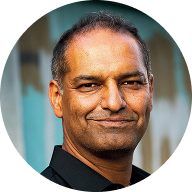
About the guest Dr. Charan Ranganath
Professor of Psychology and Neuroscience, UC Davis
Dr. Charan Ranganath is a professor of psychology and neuroscience at the University of California, Davis, where he directs the Dynamic Memory Lab. For more than 25 years, he has studied how the brain remembers past events, using brain imaging, computational modeling, and research with patients who have memory disorders, and his work has earned a Guggenheim Fellowship and a Vannevar Bush Faculty Fellowship. He is the author of Why We Remember.
Frequently asked questions from this episode
How does trauma affect memory?
Trauma can leave a memory with an emotional charge that logic alone does not undo. Dr. Charan Ranganath explains that the conscious memory of an event can split off from the body’s emotional response to it. Whether a memory keeps hurting also depends on repeated experiences, guilt, shame, and how a person interprets what happened.
What causes panic attacks?
A panic attack can keep itself going through a loop between body and mind. Dr. Charan Ranganath explains that the body gets worked up and the heart rate climbs, a person thinks “I’m going to have a heart attack,” and the heart races even more. That is why he says therapy needs both the thinking piece and the body’s fear response.
What is cognitive therapy?
Cognitive therapy focuses on changing how you think about your experiences, not only on talking them through. Dr. Charan Ranganath, who trained in cognitive therapy, explains that insight alone does not give you everything, so the work includes correcting biases such as all-or-nothing thinking and catastrophizing. He says some interpretations of a memory can be very negative and unfair to yourself, and that is what therapy works on.
How do you overcome a fear of driving?
Dr. Charan Ranganath explains that a fear of driving can be treated in small steps, starting with sitting in the car and putting the keys in the ignition. The fear response rises and then falls with repetition, so the next steps might be a loop around the parking lot, then the block, then one exit on the freeway. He adds that the driving is not always the whole story, so talking through what is underneath is part of the work.
What is exposure therapy?
Exposure therapy gradually brings a person into contact with what they fear, in small steps, until the fear response fades. Dr. Charan Ranganath explains the approach through a driving phobia: the fear response is large at first, then goes down, and the brain learns to suppress the fear association. He says learning theory calls this extinction.
What are false memories?
False memories are memories that do not match what actually happened, but Dr. Charan Ranganath prefers not to sort memories into true and false. He explains that memories are like paintings: some details are faithful, others are distorted, and every time you recall something you repaint it a little. People also have a hard time telling what happened from what they only imagined, he says, such as whether you took your medication or only thought about it.
What is episodic memory?
Episodic memory is memory for our first-person life experiences, explains Dr. Charan Ranganath. He describes how psychologist Endel Tulving introduced the concept after studying a patient with amnesia who could not recall much of the past and could not picture himself in the future. Brain scans later showed that remembering an event and imagining one light up more or less the same regions.
What does the hippocampus do?
The hippocampus is an area of the brain that is very important for consciously remembering events, explains Dr. Charan Ranganath. He says a person with damage to the hippocampus can lose the conscious memory of an event but still carry its emotional impact. In a healthy brain, the conscious memory and the body’s emotional response go together.
What is emotional memory?
Emotional memory is the feeling a memory carries, not only the facts of what happened. Dr. Charan Ranganath explains that the conscious memory of an event and the body’s emotional response to it usually go together, but they can come apart: a person with damage to the hippocampus can lose the conscious memory of an event and still carry its emotional impact. That split is part of why logic alone can’t always talk you out of a painful memory.
Moments pass in a blink. The stories are what we get to keep.